Toile and Chinoiserie Patterns: What They Are and How to Use Them
Toile and chinoiserie are two of the oldest decorative print styles still in everyday use. They are often mentioned together, and they share a love of fine line work and blue and white, but they are not the same thing. This guide explains each one and how to use them.
What is toile?
Toile, short for toile de Jouy, is a style of printed fabric that became fashionable in eighteenth-century France. A toile shows detailed scenes, usually pastoral ones with figures, trees and animals, drawn in a single color on a pale background. Blue, red and black on cream are the traditional choices.
What is chinoiserie?
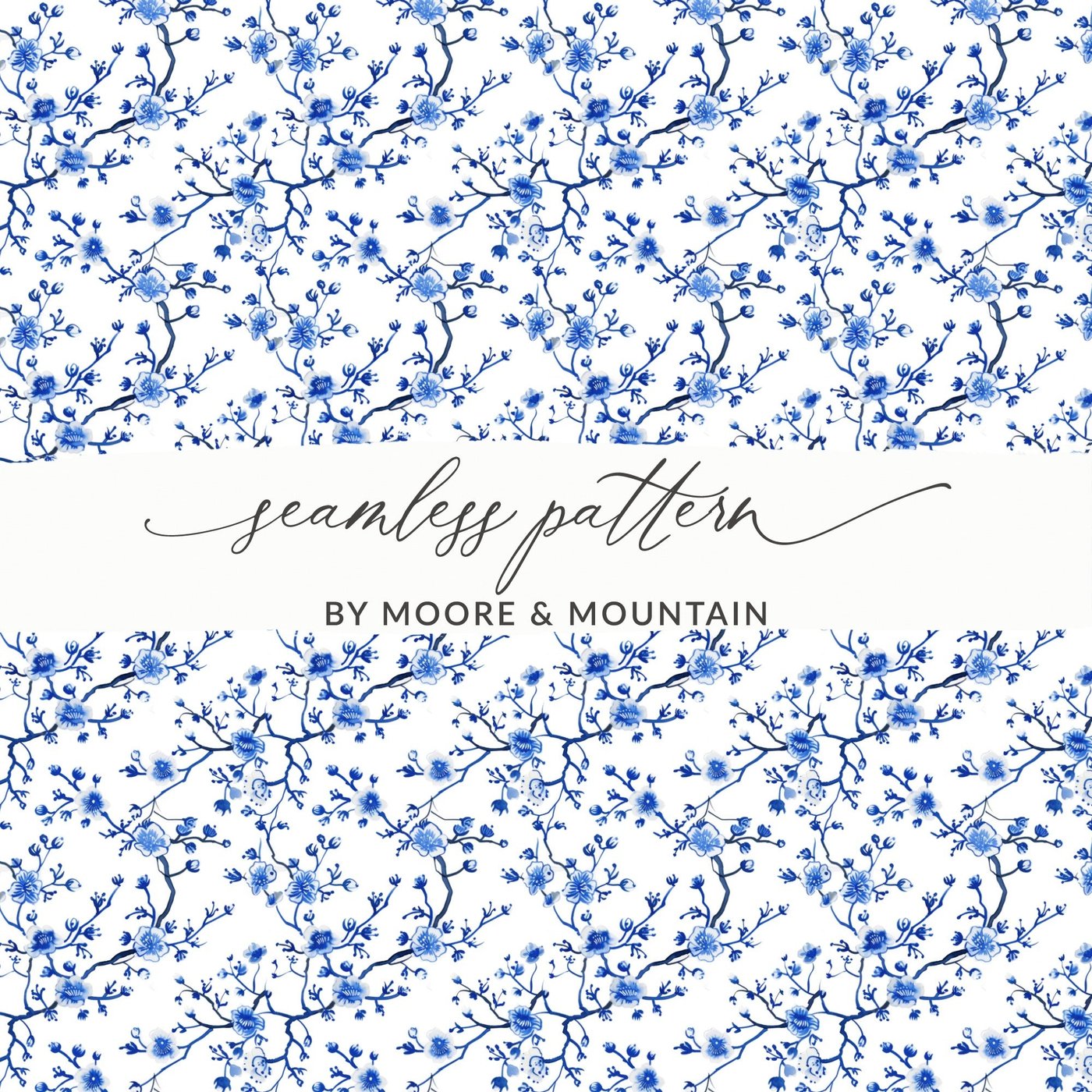
Chinoiserie is a European decorative style inspired by the art of China and East Asia. Its patterns feature blossoming branches, peonies, birds, pagodas and garden scenes, often in blue and white like porcelain, though soft greens, pinks and golds are common too.
Toile vs chinoiserie at a glance
Subject. Toile shows scenes and figures. Chinoiserie shows flowers, birds and garden motifs.
Color. Toile is almost always one color on a light ground. Chinoiserie may be one color or many.
Mood. Toile reads as French country. Chinoiserie reads as elegant and a little more formal.
The two overlap, and many modern designs borrow from both.
Every design at Moore and Mountain is royalty-free for commercial use. You can put it on products you sell, including print on demand, with no ongoing fees. The one thing you may not do is resell or share the files themselves. The FAQ covers the details.