What Is a Seamless Pattern? Seamless Design Meaning, Explained
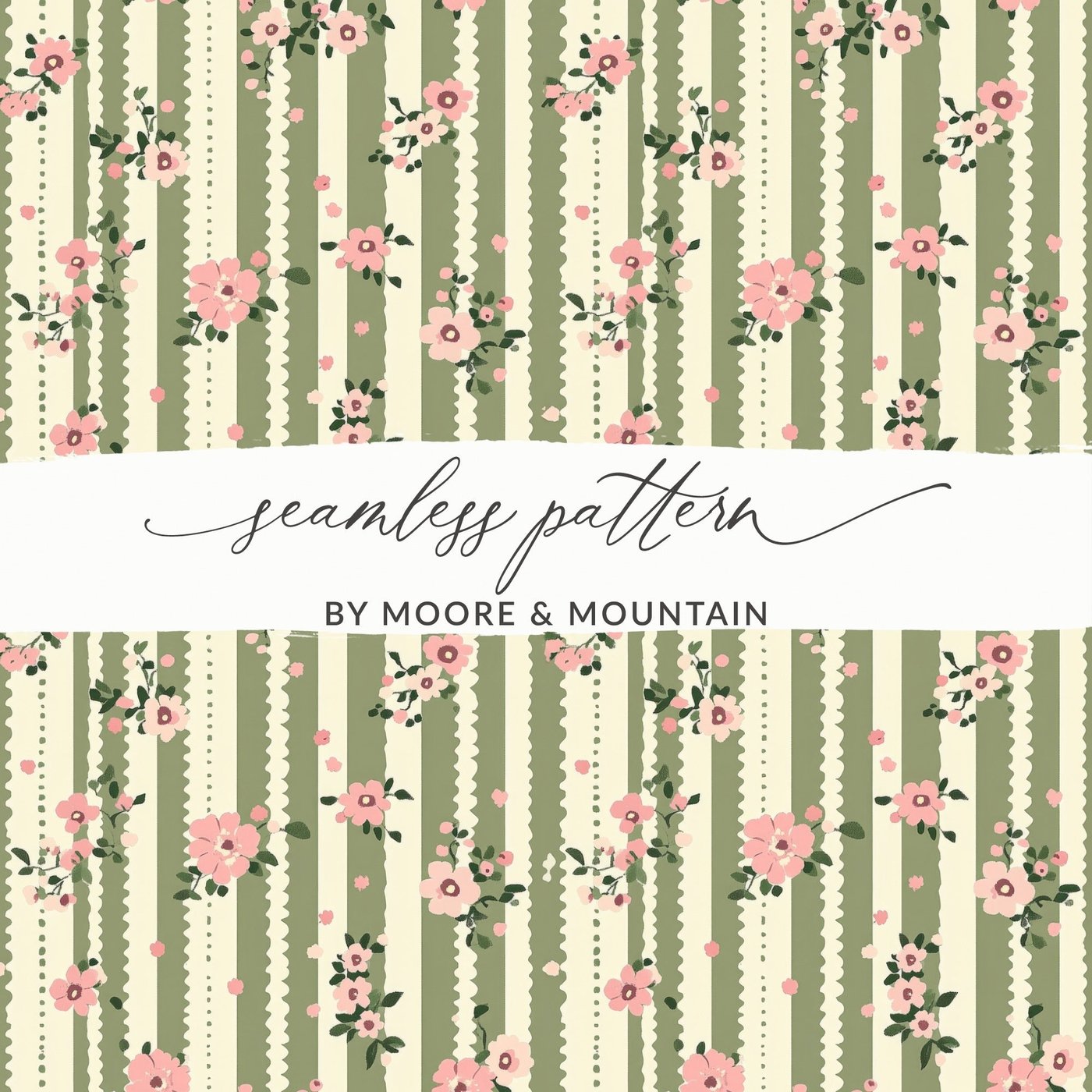
A seamless pattern is an image designed so that its edges match. Place copies of it side by side, above and below, and the design continues without a visible line where one copy ends and the next begins. That single square of artwork, often called a tile, can then cover a surface of any size.
What does “seamless” mean in design?
In pattern design, seamless means the join cannot be seen. Whatever leaves the right edge of the tile comes back in at the left edge, at the same height, and the same is true from top to bottom. You will also see the same idea called a seamless repeat, a repeating pattern, a tileable pattern or an allover pattern.
Why seamless matters
One file, any size. The same tile can cover a gift tag or a roll of wallpaper.
No visible joins. Fabric, wrapping paper and tumbler wraps all need the print to meet itself cleanly.
Small files. You store one tile, not a huge image for every product size.
The main types of repeat
Block repeat. The tile is repeated in a straight grid, like floor tiles. It is the simplest repeat and the one most print-on-demand tools expect.
Half-drop repeat. Each column is shifted down by half a tile. It hides the grid and is common in wallpaper and florals.
Brick repeat. Each row is shifted sideways by half a tile, like a brick wall.
Seamless pattern or single image?
A seamless pattern is built to cover a surface. A single image, such as a piece of clip art, is built to sit in one place: the front of a tee, a card or a mug. Many products use both, with a pattern for the background and one illustration on top.
How to check that a pattern is truly seamless
Tile it. Place four copies in a two-by-two grid and zoom in on the joins. Nothing should jump, cut off or double up.
Offset it. In an image editor, shift the tile by half its width and height. The old edges move to the middle, where any seam is easy to see.
Preview it on a product. Print-on-demand mockups repeat the tile for you, which shows the scale as well as the joins.
How to use a seamless pattern
Set the scale first. Resize the tile so the motifs suit the size of the product, then repeat it.
Keep the resolution up. For print, aim for 300 DPI at the finished size.
Do not stretch it. Scale the tile evenly, or the edges will no longer match.
Every design at Moore and Mountain is royalty-free for commercial use. You can put it on products you sell, including print on demand, with no ongoing fees. The one thing you may not do is resell or share the files themselves. The FAQ covers the details.